



GATECRASHER BIRMINGHAM REVIEW
The Gatecrasher lion, so symbolic of the brand’s glory days, may have hung up its glow sticks and laid clown in the ashes of the Sheffield club, but Gatecrasher has reared its head once again – now a very different beast – and come back bigger and bolder than ever before. Following the closure of Bed nightclub and the fire of Gatecrasher Sheffield, only Gatecrasher Lo¬ves Nottingham and Gatecrasher Seven in Leeds remained, and the dance brand’s fans waited with baited breath to see if a new clubbing phenomenon would rise.
And rise it did, a whole 65 feet into the air, the form of a £ 1,5 million, 2,400- capacity nightclub in central Birmingham, following the acquisition of The Works. The Miami-influenced venue spreads across a staggering 35,000 sq ft, comprising four levels, four individual rooms, six feature areas and nine bars. Says Gatecrasher founder and MD Simon Raine: “We had no intention of taking an old Works nightclub, but when we visited and I stood on that balcony and looked down I just thought ‘wow what a fantastic space’.”
The superclub has surpassed all expectations and – along with matter at the 02 this month – is probably the most impressive large-scale club NIGHT has come across in 2008. This is evidence of Simon’s ambition to revolutionise Upper Broad Street, create an impact on customers and shake up the UK’s clubbing scene. Uninspired by the UK’s club design, Simon looked abroad and instantly became excited by the work of renowned US designer Cal Fortis, of Big Time Design. Cal is responsible for the award-winning designs – best interior design, best renovation – of the world’s most famous clubs, including Crobar New York, Crobar Chicago. and the Cameo Theater in Miami. His clubs are revered the world over with fans including Paris Hilton, Harrison Ford, Lenny Kravitz, Cameron Diaz and George (looney, to name a few. Says Simon: “He understands nightclubs better than any designer; he sees a nightclub from many different perspectives, as an operator, a creative designer and from the point of view of the dubber. We are taking some big risks in the UK with some of his designs, but these are risks that he has already taken and which work exceptionally well in the US market. Our matrix wall is Eke the one in Cameo, but he’s re-designed it, so it’s the future of where Cameo Miami was. He’s made it bigger, better, brighter and with more features.”
The matrix wall Simon talks of is the most iconic of many spectacular, bespoke architectural features that transform the venue into a stage for spatial drama. The first thing that strikes people as they enter the cavernous main room is this 11 metre structure, which looms overhead, stretching from floor to ceiling, built from square LED panels, and displaying light, graphics and video. It has a three dimensional design, with three vertical columns intersected by two horizontal sections, and has been covered on all sides by LED panels brought over from China by Lighting Effects Distribution, under the technical management of Woody. Damian Gale of Willow Sound & Vision, which installed the lighting, video and LED video at the club, says: “The Video LED columns were a unique challenge due to the sheer scale of installation, this work along with the back colour change took approximately 1,000 working hours to install. [along with Cannock Electrical and Mechanical Installation] hut the finished effect is jaw dropping. We have performed many video LED installations but never 11 meters high and 20 meters wide! We feel that Gatecrasher has performed an amazing task changing the existing venue without major structural building changes; what they have created gives the customer a unique experience wherever they stand, this is a hard act to follow.”
Definitive Media’s Stuart Wilson made the content for the matrix by producing over 250 bespoke video LED loops, specially designed to work with the 3D effect of the display. With the 3D construction of the LED display, the team had to design the visuals with pixel perfect mapping, which allowed the visuals to wrap around the structure seamlessly. Each video sequence was split into layers and assigned to each face of the wall, which gave the ability of full control over the 3D display. The playback system is Arkaos DMX with LED mapper to match the screen resolution to the LED display. Around the rest of the room, Pioneer DVJs combine with Resolume graphics computers to give a fresh twist to visuals, mixed by the new Edirol V8 vision mixer and Projected by five Benq projectors.
Elsewhere, Gatecrasher Birmingham (GB) is coloured by vibrant images, open floors, catwalks, sin bins, dancefloors, kissing booths, and a 14ft mirror ball DJ booth. Fortis describes the design of the club as a high-concept homage to New York’s Palladium and the era of disco. Cal’s influences stem from the mid-’80s when Ian Schrager and Steve Rubella post Studio 54 New York sin bin, The Palladium, was in full swing. Fortis explains: “There was a freer sensibility to nightlife then — everyone mixed on the dancefloor, clubland was full of sex appeal and sizzle. I want to bring back that kind of danger and rawness to clubland; Scarface meets the dark side of Saturday Night Fever, meets a Brazilian hooker in an analogue, not digital world.” Simon adds: “Gatecrasher Birmingham is a film set, a huge expansive studio space with oversized architectural pieces inserted to create a juxtaposition between Fear & Loathing In Las Vegas meets the visual aspects of Blade Runner. It’s more than the music, glamour and flashing lights of previous Gatecrasher venues.”
To create and implement such an eclectic and complex design scheme, Simon hand-picked “the best design team in the world”, drawing on the expertise of Cal and Matt Rawlinson Design Ltd for conceptual design, who worked in collaboration with overall design project managers Design at Source, led by Stuart Trett, and main contractor Phelan Construction. Stuart explains the design process: “Big Time Design did the conceptual design and big set pieces for the main room and Matt did conceptual design for Bed, whilst we pulled all of those areas together, made them happen and in addition to that did the entire design for Mansion, Orange Pop and all the intermediate areas.” He continues: “Simon wanted to absolutely get away from what’s become a relatively stagnant and jaded UK club blueprint for nightclub layouts, which is what Big Time brought to it by getting the seating out and onto the dancefloor and breaking down that very large space.” Rows of long arching blood red leather ‘sin bins’, balconies and a section of elongated steps that are meant to represent large museum steps for lounging on, mean that the surrounding areas of the dance floor are all part of the action. To the left of the dancefloor is a ceiling-high feature wall, which towers over the entire room. Huge lexicon panels are adorned with translucent iconic prints, alternately portraying a queen and a monkey. In front is a platform for GB’s theatrical entertainers, who can also perform on the trapezes set high above the heads of the crowd.
Although the main room is the key discussion point of the venue, the entrance to it was pivotal to the design because the journey to the main room was meant to be instrumental to its impact. Once past the initial turnstyles and up the stairs, clubbers are met with a preliminary ‘departure lounge’, meant to echo the experience one has at an airport before they embark upon a trip. The room hints on the glamour within, with pendant chandeliers, ripple fold drapes and reflective ceilings. A 180 degree turn takes guests down a long futuristic tunnel, with colour-changing lights and a glass wall to one side. Around the corner is a corridor covered in old ‘crasher’ posters — a brief encounter with the brand’s heritage – before being suddenly swept into its astonishing new world, the main roam of GB. Stuart says: “The idea of the turnstyles on the way in and the tunnel makes it a bit like standing in a Disney queue line and wondering when you are going to get in.” At the hack of the main room lies Orange Pop, a separate room with its own DJ, sound system and lighting effects. Dramatically different in design and vibe to the main room, Orange Pop blends a kaleidoscope of coloured light and furnishing with pop art Lichtenstein wallpaper, rubber floors and playful LED displays on the hackbar depicting different lettering. Another play on words – a common theme throughout GB – is featured on the bar top; a yellow LG Hi-Mac bar is etched with writing, which was fabricated by Multi Surface Fabrications Ltd, along with the white rectangular bar in the Posh room. Says Stuart: “The writing is by Roy Lichtenstein. It’s about the meaning of fame and success – you might be rich and famous, but everybody drinks the same Coca Cola, goes to the same places and wears the same shoes. So it’s tongue in cheek, poking irony at the fact that everybody is at Gatecrasher thinking they’re cooler than cool.”
Designers Republic has implemented a series of overt signage around GB, identifying different zones such as ‘Powder Room’ and ‘Smoking Kills. This Way’. In Orange Pop, small ‘kissing booths’ look through to the main room, ensuring people aren’t detached from the action. Above Orange Pop on the open mezzanine level is Posh, a private bar with mood lit seating – Tokyo Pop chairs from the club’s loose furniture supplier and manufacturer Abbey Furnishings, headed by Nick Scanlan. Design at Source was also responsible for the design of Mansion, a large room off to the right of the main room, which caters for the mainstream crowd with R&B and pop. The environment is again in contrast to the other rooms, offering an opulent and sultry ambience via black velvet drapes, crystal chandeliers and mirrors. On the third floor above Posh is Bed, which can function as a separate club. Matt Rawlinson (who designed GatecrasherLovesNottingham and Gatecrasher Seven) created the concept for Bed in the initial stages of planning, as a space for the older, more sophisticated crowd. A central dancefloor, circular lighting rig and ten mirror balls give the room a disco feel, whilst the elegant bar area is flatteringly covered with leather panels that form a curve over people’s heads and reflect the ambient lighting.
Each of the four music zones — main room, Bed, Mansion and Orange Pop — will play different musical genres each night. Going against the grain of its past, GB will host indie nights on a Friday and launched with DJ sets from The Editors and Babyshambles’ Adam Pica. Says Simon: “Deep down we still love dance music and house music, but most people in the UK don’t want dance music. Gatecrasher has always been about music, it’s about delivering an experience with music. Simon states that the drama and impact of the main room demands a big sound. GB shouldn’t have a problem packing the punch due to its custom made sound system by Opus Audio, which is in excess of £50,000. Each speaker cabinet has been build for a specific area in the club. Opus Audio also provided the custom audio control and amplifiers for the venue, with Pioneer taking precedence in the DJ booths.
It is no trade secret that Gatecrasher is not in a strong financial position at the moment, having taken a loss on its Summer Sound System festival and thrown all resources at this new venture. And Gatecrasher Seven: whilst great on paper, has recently wrestled with the tough Leeds crowd, in a tug of war for their attention amongst a competitive late night landscape; it is uncertain how successful the re-design of Gatecrasher Seven was this year in reclaiming trade. Simon admitted in June: Our core audience expected more than we delivered”. But you’ve got to give it to Gatecrasher far having the halls to develop such a bold new beast. Simon is well aware of today’s tough trad ing conditions. He says: We chose Birmingham as it’s the second largest city in the UK with an immediate audience of three million people on the doorstep and historically Birmingham has been a great clubbing city.” The clubbing brand is steaming ahead with plans to refurbish its Area nightclub in Watford and a nationwide search for architecturally significant buildings to convert into nightclubs across the UK.
Cities including Manchester, Glasgow, Brighton, Liverpool and Dublin have all been earmarked as part of the group’s expansion plans through 2008 and 2009. Operations director Adrian Swain, who is involved with the Broad Street Improvement District and Pub Watch for GB, comments: We have had more opportunities in the last six months than we’ve had in the last five years.” Simon adds: “I think we are still prepared to take a risk and are always trying to buck the trend with new design concepts or technology, if you take risks then the rewards are much greater. Nightclubs and brands need to constantly evolve, it’s a simple process of ‘change or die’.”
Gatecrasher is currently in negotiations with international territory licence partners to develop Gatecrasher branded venues, and are actively seeking new partners across the globe. Meanwhile the international events and touring side of the business will continue CO operate across the globe in over 20 countries worldwide, seeing Gatecrasher parties in Russia, The Ukraine, Hong Kong, the Phillipines, Singapore, Kuala Lumpur, Australia, New Zealand, Bali and Brazil to name a few. But of Gatecrasher’s immediate focus, Simon states: “Our most important focus at the moment is GB, this will set one of the boldest statements. Then our next stop is THE return to Sheffield.” Across the road from the old lion’s resting bed in Sheffield, the earth is preparing for a new beast to take form.
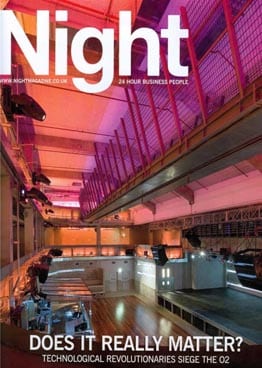
View Article: Night Magazine
SOURCE ARTICLE: Metro.co.uk
Raine believes that clubbers these days want a variety of entertainment presented in the most technologically advanced way possible.
To this end, Gatecrasher has spent £5million and hired famed American club designer Cal Fortis, the man behind the Crobar venues in New York and Miami, to transform The Works complex on Broad Street. The 2,500-capacity venue has been split into four rooms full of features such as an LED wall, giant mirrorball and top-of-the-range sound and lighting systems based on an aesthetic described as Fear And Loathing In Las Vegas meets Blade Runner.
‘This is our flagship venue and we wanted to break the mould when it came to club design,’ Raine states. ‘We had a 325sq m space and the challenge was to break it up and make it more intimate, while keeping a sense of spectacle, theatre and drama. I think we’ve achieved it. This is a club you could see in New York, Ibiza or Miami.’
‘Broad Street has changed a lot during the past ten years and the days of it being described as “the strip” are gone,’ he says. ‘But you can’t compare it with anywhere else in Birmingham because we are world-class. This isn’t the best club in the UK; it’s probably one of the best clubs in the world.’
VIEW THE FULL ARTICLE AT METRO.CO.UK
VIEW AS A PDF
BEYOND MUSIC, BEYOND GLAMOUR, BEYOND DISCO: GATECRASHER BIRMINGHAM
Gatecrasher have enlisted the expertise of designers Big Time Design, headed up by a legendary nightclub designer Callin Fortis, to create the ultimate Miami style club experience, devised in Ibiza, designed in New York and built in Birmingham.
View Article: Bora Mag
100 MOST INFLUENTIAL PEOPLE IN NIGHTLIFE
As the duo behind international clubhouse Crobar, Ken Smith and Cal Fortis are a power team. Fortis creates the ambiance and Smith keeps the customers happy.
View Article:
944 Miami
WORLD’S TOP NIGHTCLUB DESIGNERS: BIGTIME DESIGN
Designer, nightlife impresario and Bigtime co-founder Callin Fortis primarily known for the nightclub design and branding of the international and award-winning brand of Crobar nightclubs, BTDs is combining fashion, music, branding and design consulting into one package with new company Bigtime Design.
View Article:
Bora Mag
CROBAR IMPRESARIO RETURNS
Designer, nightlife impresario and Big Time founder Callin Fortis – primarily known for designing and branding the international and award-winning brand of Crobar night-clubs – is combining fashion, music, branding and architecture into one package with new company Big Time Design.
View Article:
Pacha Magazine Back Issues
View PDF:
Pacha Magazine PDF
COVER STORY: 6TH ANNUAL CLUB WORLD AWARDS
Big Time Design wins the Best Nightclub Renovation and gets nominated for Best Nightclub Interior Design for their work on Cameo Miami.
View PDF: Club Systems Awards
COVER STORY: NIGHTLIFE’S 30 MOST INFLUENTIAL PEOPLE
The iPod of nightlife might not be the perfect analogy, but it certainly matches the type of brand recognition crobar enjoys. The anticipation with which the industry awaits creators Ken Smith and Callin Fortis’ next move puts the duo on top of our list.
View Article:
Club Systems Internaional
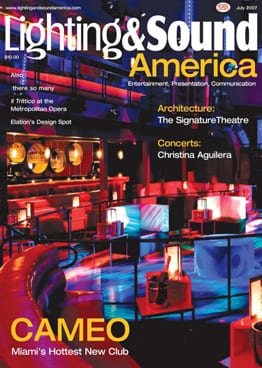
COVER STORY: CAMEO – MIAMI’S HOTTEST NEW CLUB
Cameo is the brainchild of Callin Fortis, club owner and designer (Big Time Design), and, with his business partner, Ken Smith, the force behind the Crobar clubs in Chicago, New York and Miami.
View Article:
Lighting & Sound Magazine
CLUB DESIGNERS
With Cameo, Chicago kingpin Callin Fortis undid his crobar creation and remade it in the likeness of the Palladium of the past. Picture Wright retrofitting the insides of Burnham & Root’s Rookery while dancing to a “dirty disco” beat. It’s the hallowed hollowing of a classic core to make way for a whole new modernity, a keen that not only knows history, but knows how to make it.
View Article:
944 Magazine
CAMEO, MIAMI
The start of 2007 saw a new venue, Cameo, join the competitive Miami club scene. A replacement for the popular Crobar club, it is a collaboration between two of the cities most successful operators, Louis Puig; (of, among others, Space club) and the Crobar team of Ken Smith and Cal Fortis. This union came about because Ken and Cal had been very busy franchising Crobar worldwide and had very little time to spend in Miami.
View Article:
Mondo Magazine
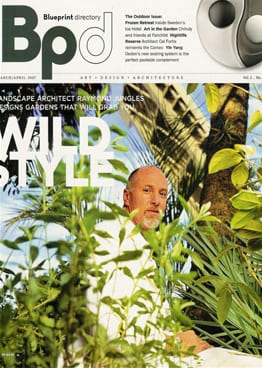
“It’s going to happen,” says designer Cal Fortis, who is sitting in a small office in the Cameo Theatre, chain-smoking Marlboro Light 100s, talking about his attempt to remake his world-famous crobar nightclub, of which he is a part owner, into a whole new nightclub that looks as little like his previous one as possible. “Everyone is going to compare it to crobar. It’s inevitable,” he says, exhaling a long stream of smoke into the air.
View Article:
Blueprint Directory
HEAVY
When asked what his favorite aspect of his job is, Crobar brand Co-owner and Co-creator Ken Smith says nothing of mingling with celebrities, rubbing elbows with the greatest DJ talent on earth or knowing that his brand is on the verge of becoming internationally established. “The people,” he says. “It is different every night, but I always know that 1 am going to meet someone who is going to make me laugh.” Completed by the other half of the brand creation, Callin Fortis, the duo’s at-titude is pervasive throughout the Crobar philosophy in all three locations, Chicago (1992), Miami (1999) and New York (2003).
View Article:
Nightclub & Bar Magazine
THE CLUBS THAT CALLIN BUILT
There is sociology to good nightclub design. How people move through space while they are dancing is critical. Because New York is one of the biggest melting pots in the world, we felt the way we would generate the most excitement was to create a metaphorical melting pot on the dance floor. With the design I attempted to encourage the “user” or patron to forgo his/her social boundaries while experiencing crobar.
View Article:
Loft Magazine
CLUB DESIGNERS
Callin Fortis and Lionel Ohayan, December 2003
crobar is one of a crop of new superclubs that have been unleashed on New Yorkers over the past couple of years. Like many of the other venues, it is located in Manhattan’s destination du soir. Chelsea, and is the third crobar to emerge in the US, with sister clubs in Chicago and Miami, all owned by Callin Fortis and Ken Smith, crobar follows in the nightclub tradition of being forged from a reclaimed industrial warehouse space, and is apparently the first large-scale venue to be built from virgin property in New York in over a decade.\
Buy the Book:
New Bar & Club Design
View Article:
New Bar & Club Design
Perched on the edge of Lake Michigan, America’s third largest city has long been famous for its modern raucous character and tumultuous history. Chicago’s hippest and most fashionable restaurants, bars and lounges are profiled in this handy little guide.
View PDF:
Cool Restaurants Chicago